
(08)
Real change comes from small,
everyday actions at your own level
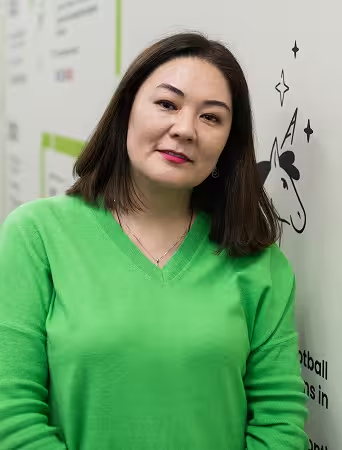
Aigul Aliyassova /
Communications Manager CIS
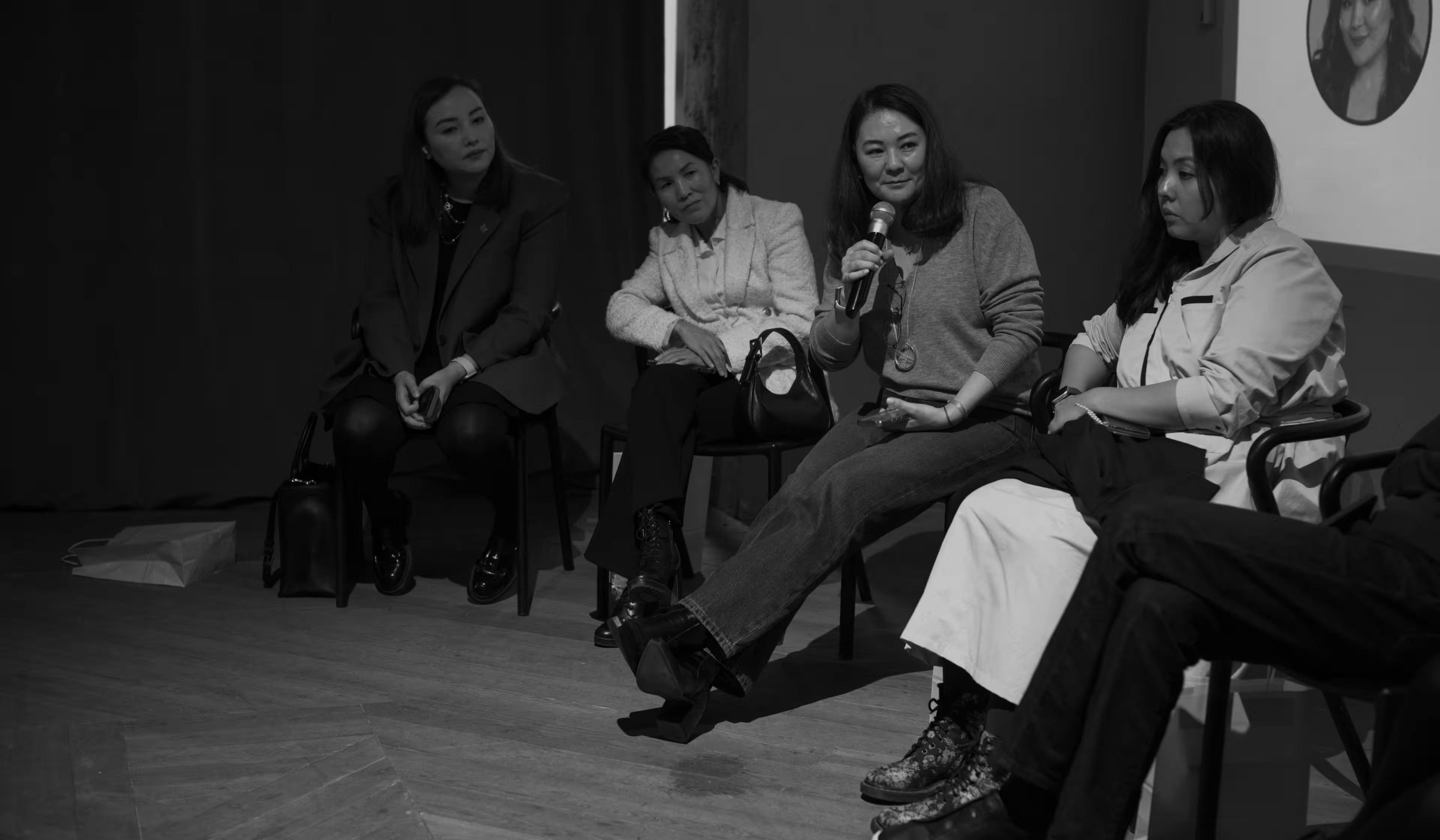
As a child, I witnessed the unfair treatment of my loved ones (my mother and sister are people with special needs), and I had to take on a lot of responsibility quite early.
I am driven by a sense of justice and the need to do something meaningful for vulnerable groups.
helpingSince my mother worked as a librarian, I learned to read at a young age, and I was always fascinated by strong female role models in books.
helpingFor as long as I can remember, I have volunteered. Over the years, I have helped the disability rights society promote projects on inclusive education and mobile accessibility; I’ve worked on projects with orphanages, and I’m also a member of the TEDxAlmaty team. But I became consciously focused on women’s rights five years ago.

In Kazakhstan, the issue of domestic violence is quite serious. Formally, the laws protect women’s rights, but unfortunately, they do not always work in practice.
helpingStill, the government is making significant efforts to improve protections for women and children. In 2024, the “Saltanat Law” was passed, named after the tragically murdered Saltanat Nukenova, which strengthened penalties for domestic violence. And in 2025, amendments to the Labor Code were introduced that establish liability for workplace harassment.
helpingGlobally, the conversation is increasingly centered around women’s empowerment — the expansion of rights and opportunities for women and girls. Here, these processes go hand in hand with a broader public discussion about outdated patriarchal stereotypes that hinder gender equality, as well as the fundamental right of women and girls to feel safe.
Together with lawyers, we discuss defense and communication strategies. I focus on my part — press conferences, press releases, interviews, and working with journalists and influencers.
I provide pro bono support to women who have survived sexual violence, helping them defend their rights in court and seek fair punishment for offenders.
helpingThis work begins the moment a woman files a police report and continues even after the court delivers its verdict.
helpingI didn’t intentionally choose the field of women’s rights — one could say it chose me. My friends, human rights defenders Zhanna Urazbakhova and Aliya Omarova, were defending a young woman who survived gang rape involving a former prosecutor and a bank top manager. Unfortunately, the investigation stalled, and public engagement was needed. I offered my help as a volunteer communicator.
helpingThe case was won, and the perpetrators were sentenced to eight years in prison. After that, together with Zhanna and Aliya, we had several other important and high-profile victories that helped spark a shift — in the past five years, more women in Kazakhstan have begun overcoming stigma, reporting violence, and achieving justice in court.
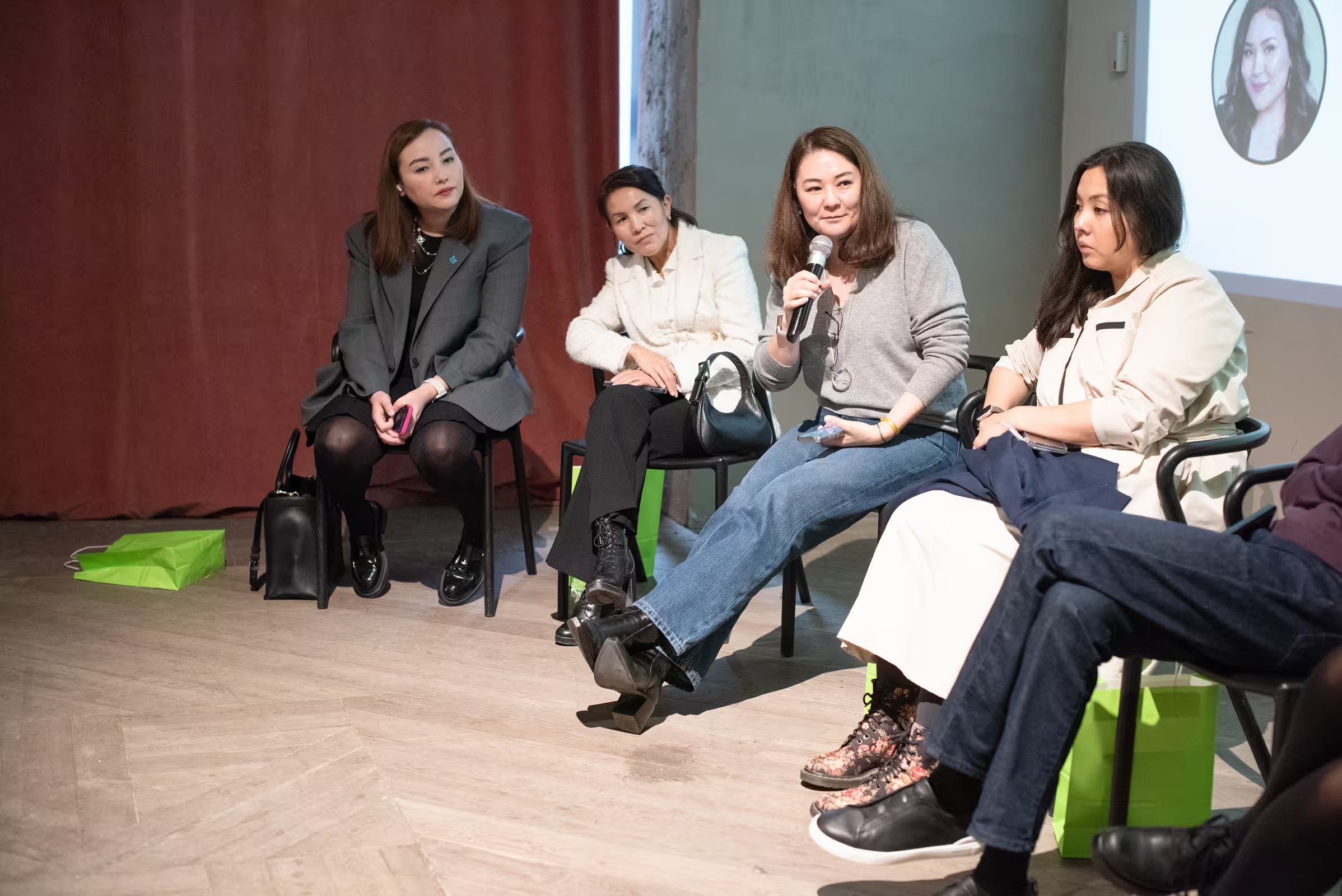
At the core of human rights work is humanity — you have to see not a “case,” but a real person. You must be empathetic and ensure you do not retraumatize the survivor.
helpingIn communication, we avoid using the word “victim,” helping a woman regain a sense of control over her life, because her life does not end after what she endured—it continues. And it is important not to fixate on the negative experiences of others and not to see men as a threat, but instead build a supportive environment of male friends and colleagues.
helpingI was deeply moved by the story of Aya, who survived an attempted rape by a law enforcement officer. She is one of the few women who were brave enough to show her face and publicly ask for help through social media. She endured threats, online bullying, and pressure from the suspect, but she persevered. At the time of the attack, she was wearing a hijab and fully covered—once again disproving the common myth that women provoke assault with revealing clothing. The perpetrator was sentenced to nine years.
helpingAnother young woman, Ulzhan, went through a tragedy even after winning her case — an intimate video used to blackmail her was leaked online out of revenge. We had to work through the aftermath. This didn’t break her, and she found the strength to move forward. Each of these women is a true heroine who shows that you must believe in yourself and keep fighting to the end.
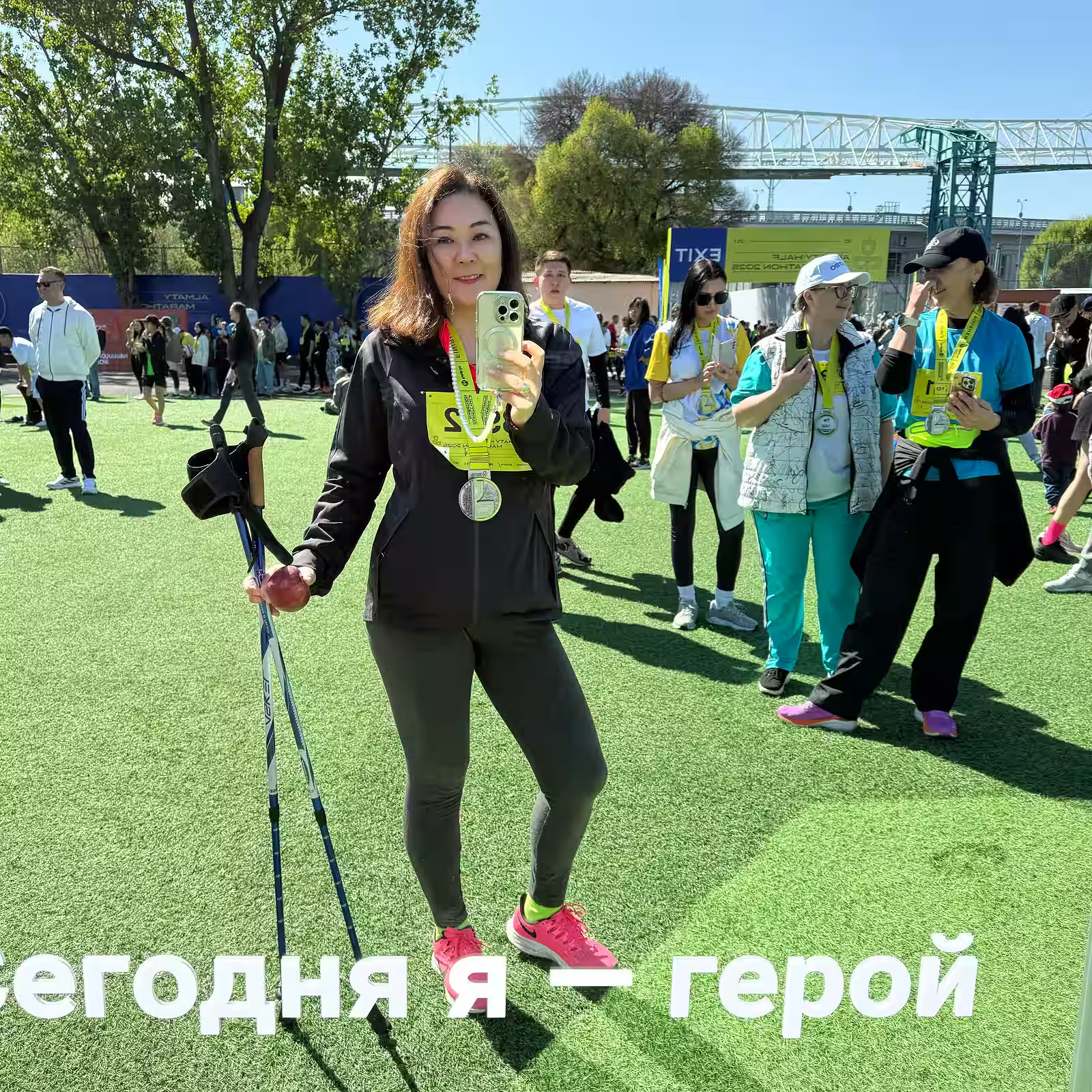
An investigation and trial can take up to a year. It is emotionally difficult and draining; volunteers and people in helping professions often burn out, and I’m no exception. I restore my energy through hobbies — I’ve been running with the NRC+ Almaty club for 10 years, I hike in the mountains, love traveling and reading, and I adore animals.
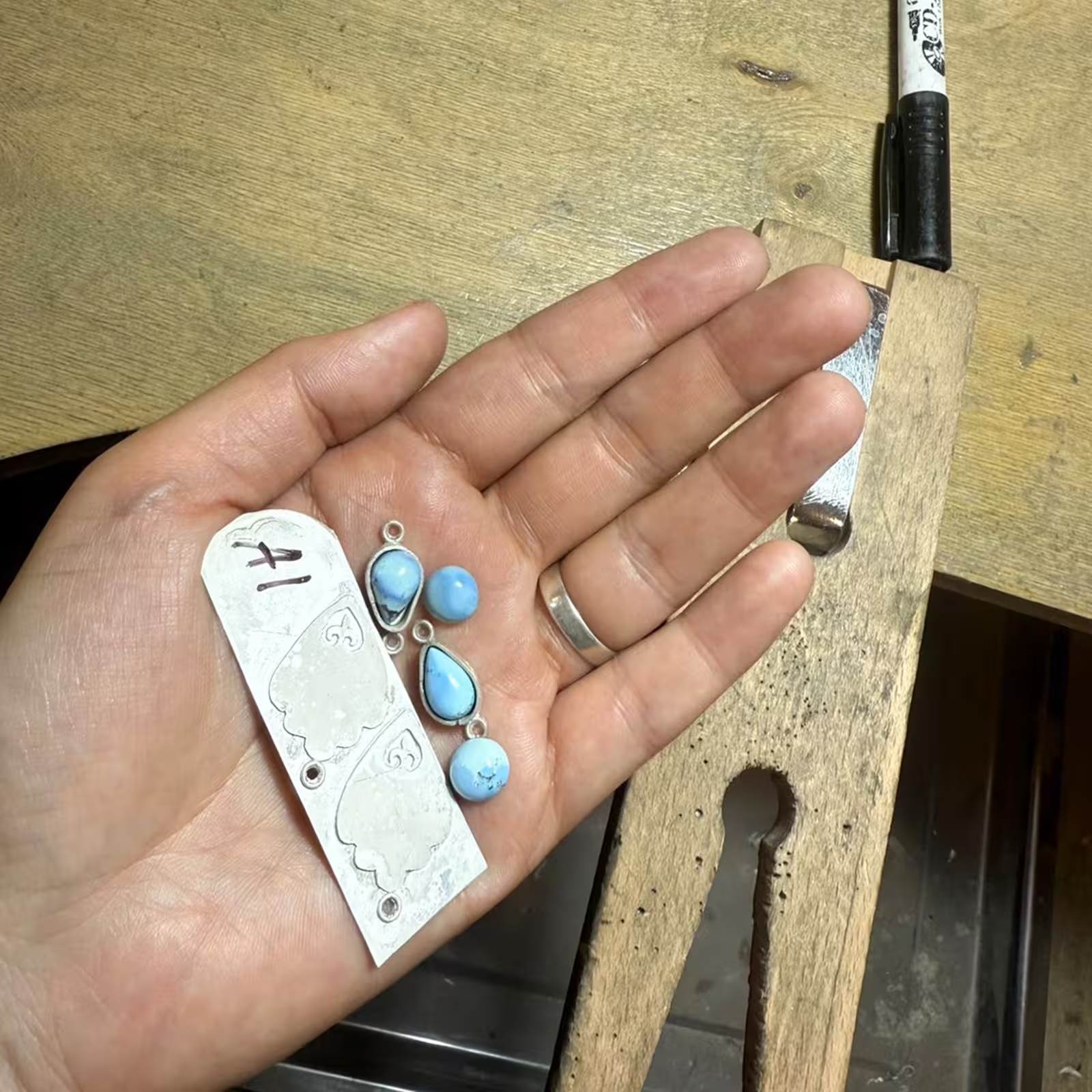
It’s true craftwork: when you work with a melting point of 900°C and pour molten silver, all thoughts disappear and you enter a meditative state. I’m still an apprentice, but someday I dream of creating my own tiny indie brand of modern Kazakh jewelry — pieces for myself and my friends.
For a year now I’ve been studying jewelry-making — learning to create pieces from silver and semi-precious stones.
helpingRight now, I’m more focused on gender education and micro-feminist practices. This is when you try to make the world a little better at your own level, focusing on small everyday actions — at work and in life — that create real change. In my job, I enjoy solving challenges at the intersection of business, communications, and social mission.
helpingFor example, many male drivers don’t even realize that attempts to flirt or compliment female passengers can be considered harassment. This isn’t a problem of one business or the ride-hailing industry — it’s a deeper issue within society that requires gender education and awareness.
Everyone loved the idea, and beyond Kazakhstan it will be implemented in Africa and the Middle East—and possibly in other regions later.
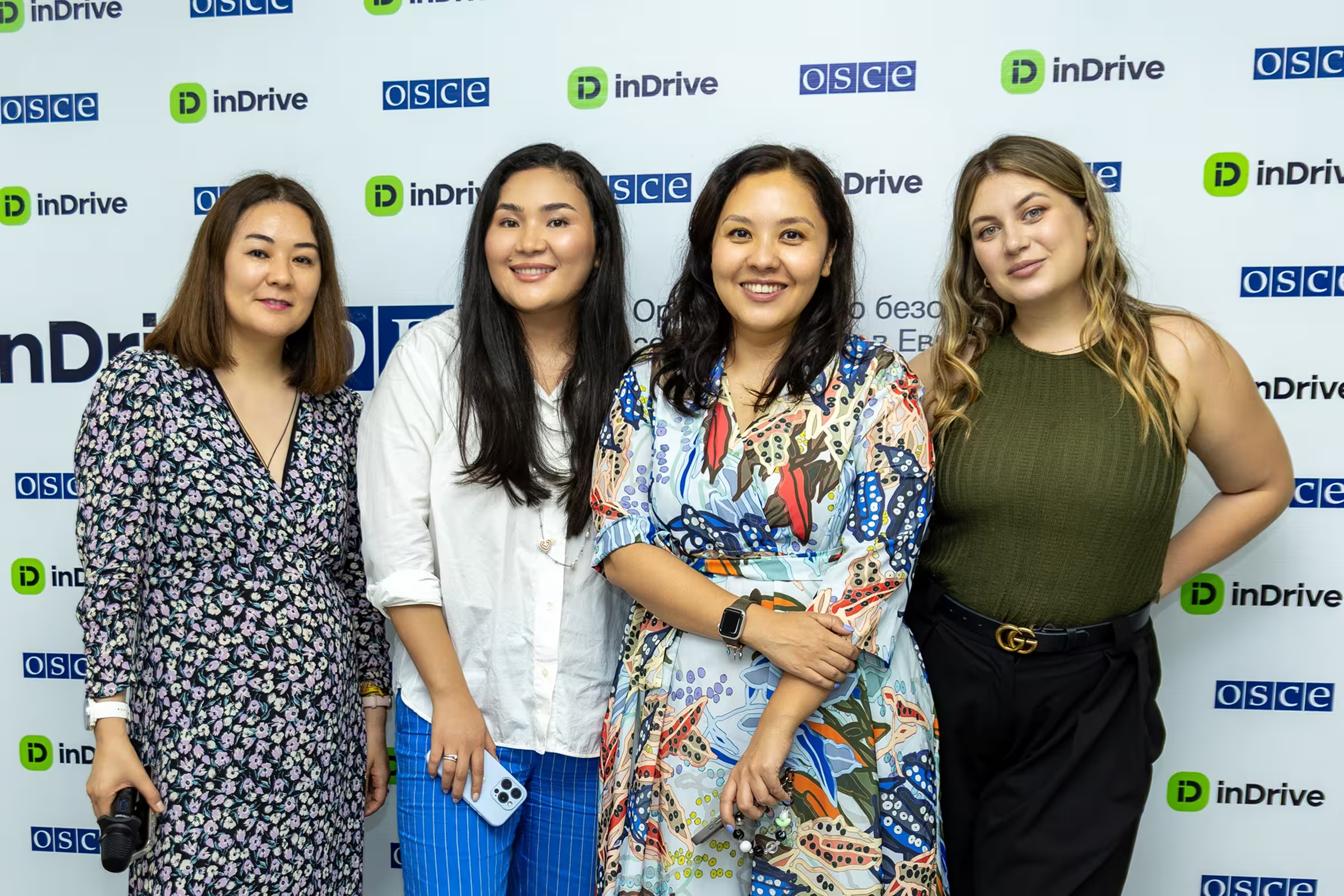
This summer, inDrive and the OSCE held training for drivers on ethical intergender communication. I managed this event, and recently we recorded the training as a video course that will soon appear in the Drivers Academy section of our app, so that drivers can complete these lessons.
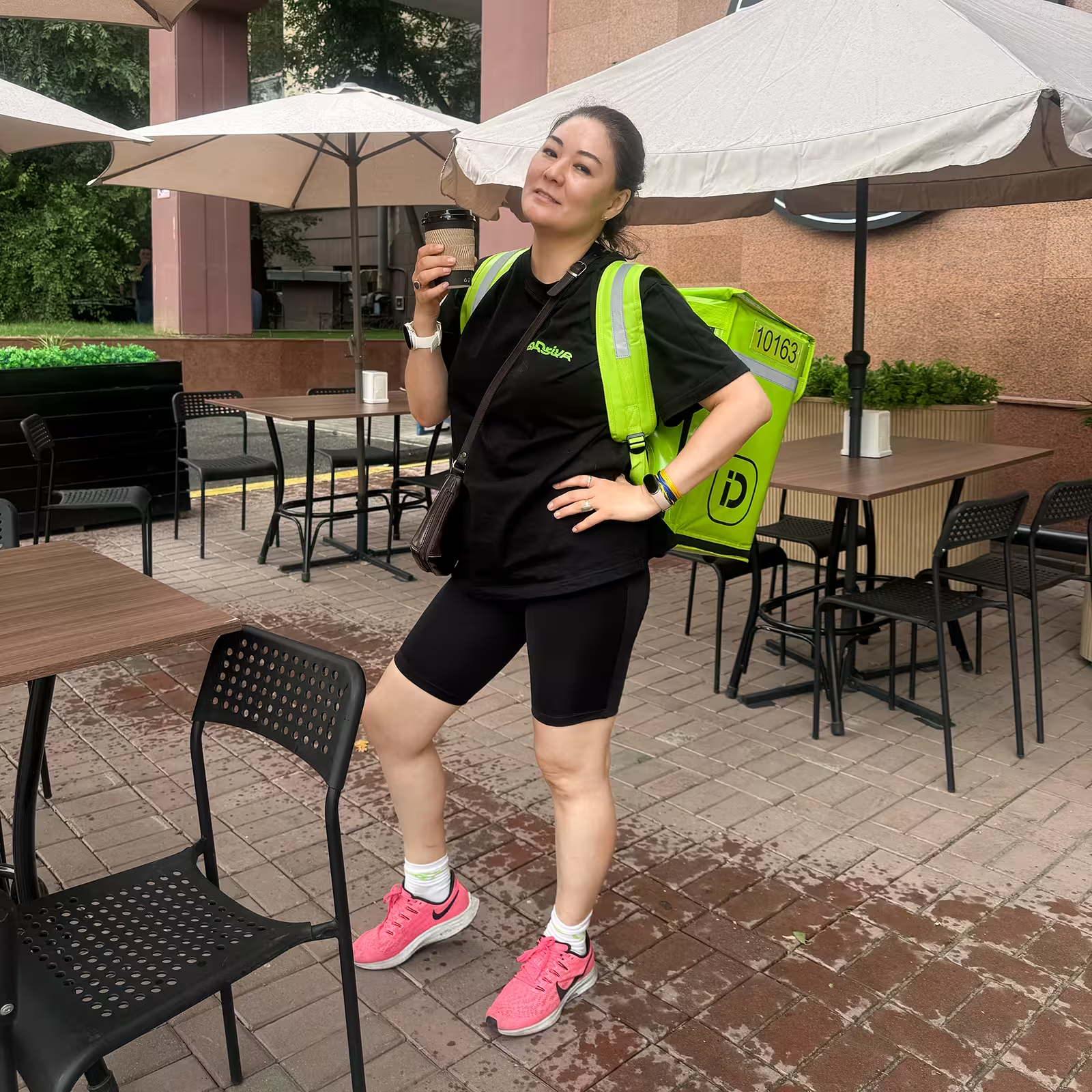
helpingI love that I can bring my experience into my work. Marketing and Impact colleagues often reach out to me for consultations when designing safety-focused campaigns, and I help build relationships with influencers in the women’s rights space.
A fun fact about me: long before joining inDrive, I was fascinated by Sakha culture, learned to play the khomus from virtuoso Yuliana Krivoshapkina, and even organized a workshop with Yakut blacksmiths in Kazakhstan.
I dreamed of working at inDrive precisely because my personal volunteer mission aligns so closely with the company’s purpose-driven mission — to fight injustice and create positive change.
helpingAfter the company relocation, I read Arsen Tomsky’s book and realized that his values and mission resonate with me. I’m happy to be surrounded by colleagues who share similar values; I believe we have the best team in the world, and I learn a lot from them and feel inspired by them.