


Learn the terrain. A competent alpine racer never enters a course blindly



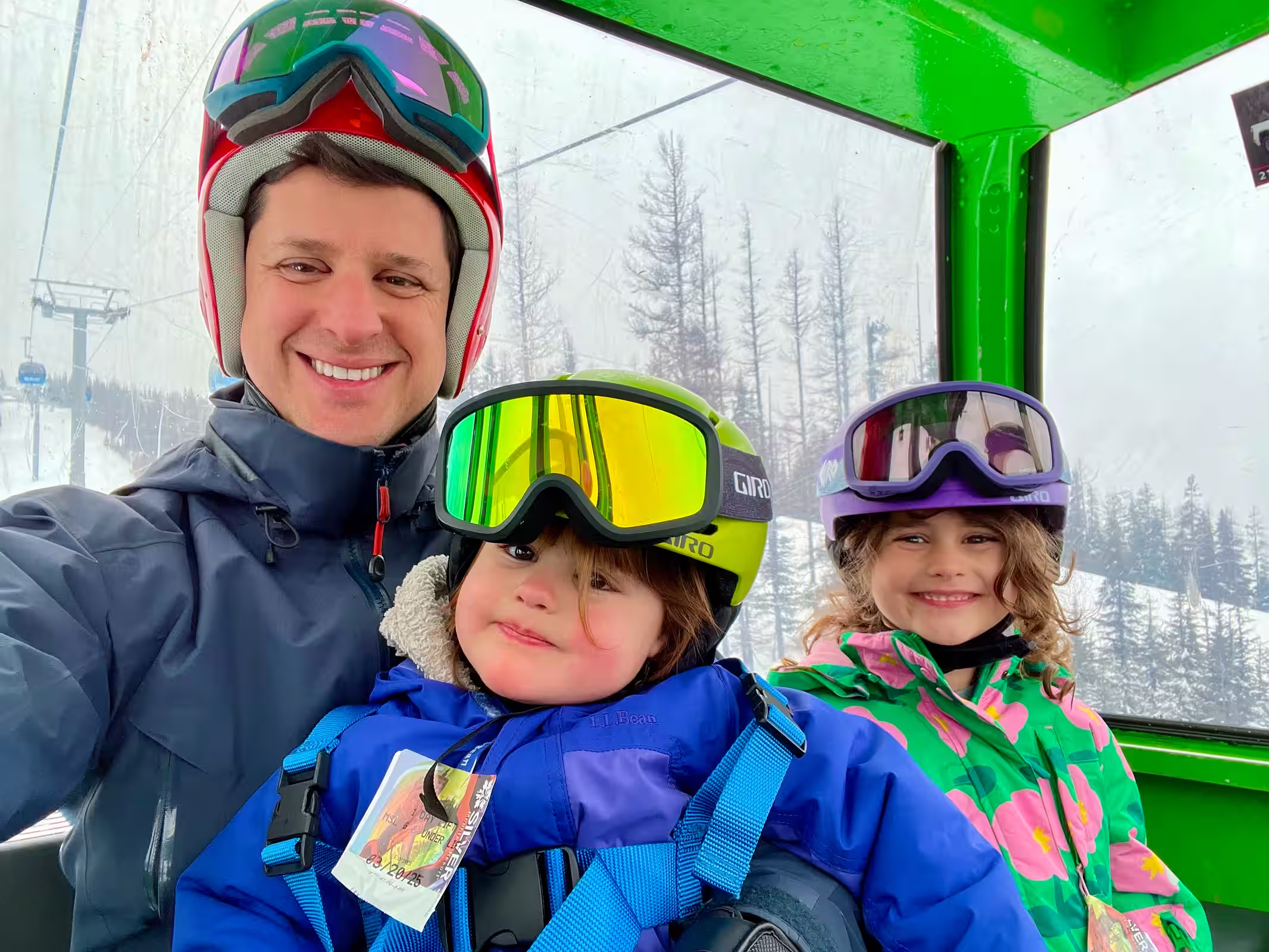
I’m from the United States — Maine, specifically. It sits at the top of New England like a frostbitten pine tree. Winters here are long, cold, and unapologetically snowy. In other words: perfect skiing weather.
helpingMy grandfather skied to school as a boy. He later taught my father. My father, in turn, taught me, beginning when I was five years old and barely tall enough to see over the chairlift bar. Ours was an outdoorsy family: hiking in summer, sailing when the wind cooperated, and skiing whenever the mountains turned white.
helpingMy first pair of skis were a Christmas gift. Coyotes, pure 1980s design, aggressively neon in a way that could probably be seen from space. Why did I take to skiing?
helpingI liked going fast. I liked spending time with my father. And, crucially, there was always the promise of hot chocolate afterward, which remains one of the more reliable motivational tools so far discovered by our species.
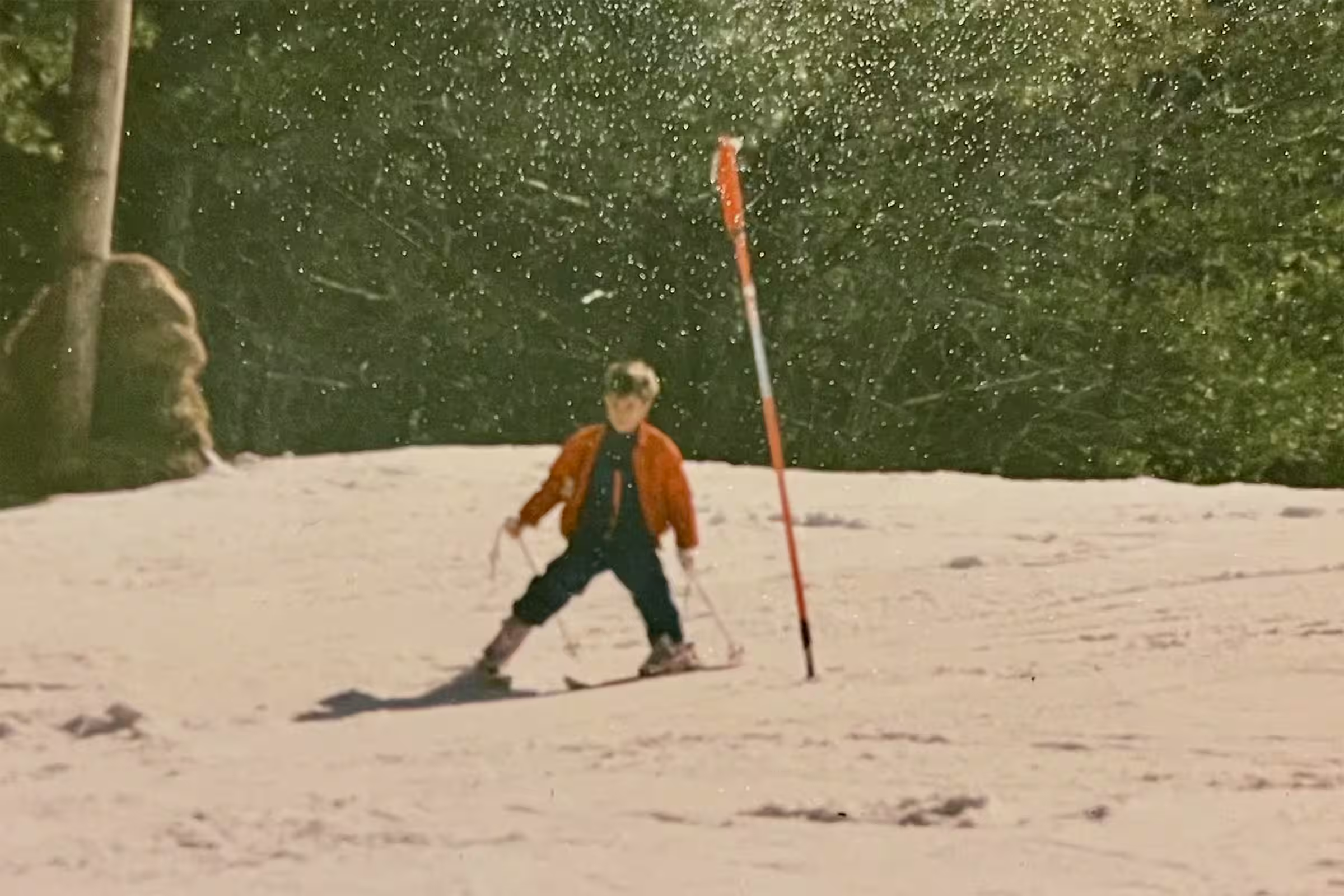
But improvement came gradually. What begins as a struggle to stay upright eventually becomes something closer to flight. The first time you realize you can ski anything on the mountain — fast, confidently, with control — it becomes addictive in the best possible sense.
At the beginning, of course, skiing was a spectacularly inefficient activity. I fell constantly, as everyone does. At age six, I even managed to fall off a chairlift, an achievement immortalized in a piece of childhood artwork that suggests my artistic talents peaked early.
helpingAt fourteen, I began alpine ski racing. It was intimidating at first. Most of the team was older and had years of racing behind them. “Pre-season” involved long runs in the rain and a great deal of strength training — activities designed mainly to test one’s commitment to the sport and tolerance for misery.
helpingThen the snow arrived, and everything made sense again. On winter weekends the team would head up to the mountains. We trained all day on the racecourse, waxed and sharpened our equipment in the evenings, and then behaved like the sort of teenagers one might reasonably expect to find living unsupervised in ski mountain dormitories.
helpingI remember I was sitting in a hot tub in the middle of a violent blizzard, Radiohead’s OK Computer playing in the background, when I realized with complete clarity that skiing had become essential to me.

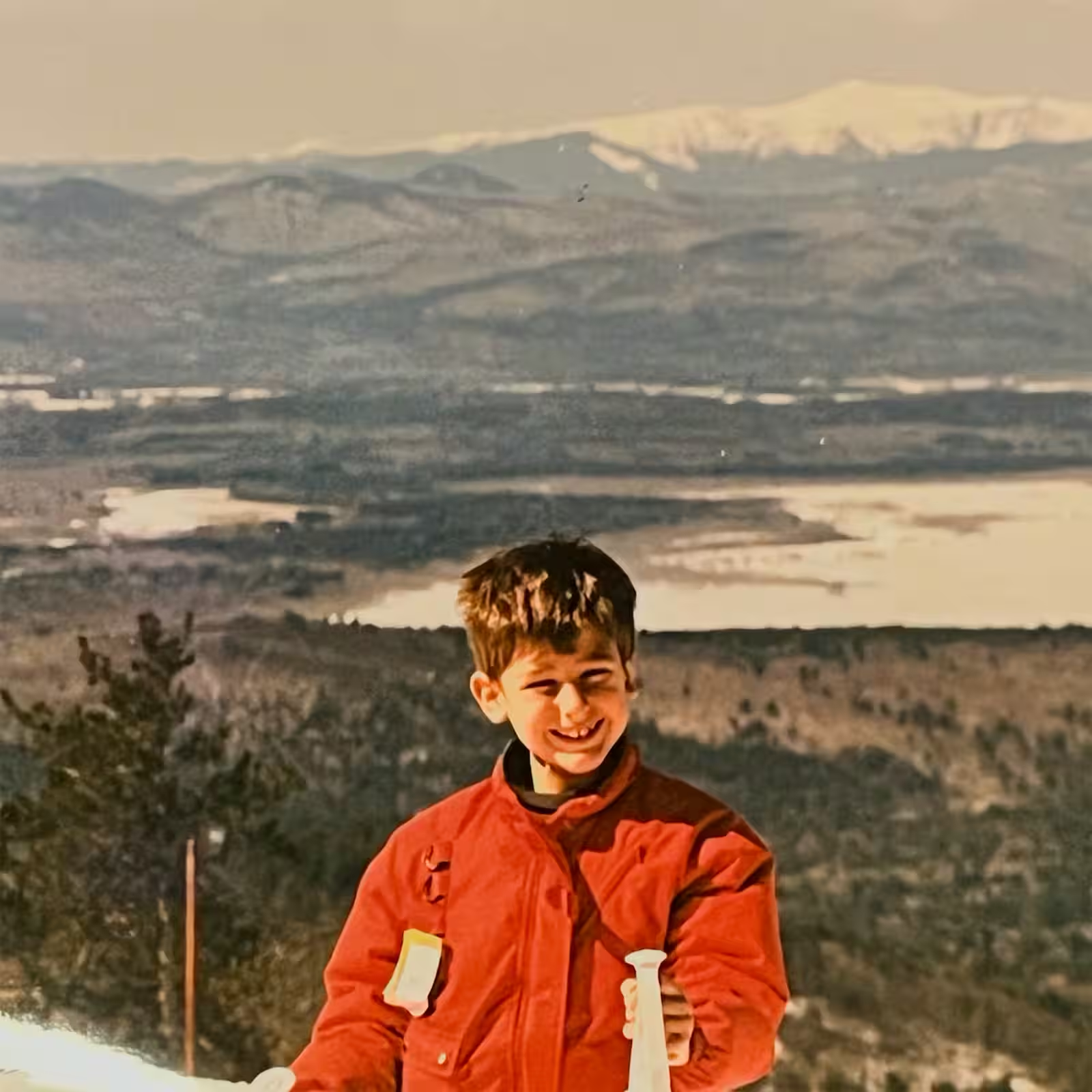
It was more than a link to family tradition or to the state where I grew up. Done well, skiing produces a sensation unlike anything else: launching down from the mountain’s peak, tethered to the earth by only the edges of your skis, both time and sense of self vanish. Pure flow results.
helpingOn the course, flow was less frequent at first, but with time and practice my racing improved. I eventually became team captain, and our squad did well in the state championships. I briefly entertained dreams of racing in college; Middlebury, where I studied, fields a top-tier alpine program populated by athletes who occasionally appear in the Olympics.
helpingSensibly, I decided to preserve both my dignity and my ligaments by racing elsewhere. Instead, I joined the NASTAR (National Standard Race) league, where I still compete each winter, along with the U.S. Ski and Snowboard Association Master’s League. The truth is that ski racing becomes more interesting over time. The thrill is not merely speed — though speed at an angle is pure adrenaline.

First: learn the terrain. A competent alpine racer never enters a course blindly. You inspect the slope, study the rolls in the terrain, measure the distance between gates, and note the patches of ice waiting to eject the careless racer into the orange netting. The same principle applies in corporate law.
There are also parallels between ski racing and the practice of corporate law. These connections, I suspect, make me a better lawyer for the company.
helpingBefore charging into negotiations or regulatory territory, you must understand the landscape: where are the legal obstacles, who holds leverage, and where might we catch an edge? Are we navigating a gentle blue run — or something closer to avalanche conditions?
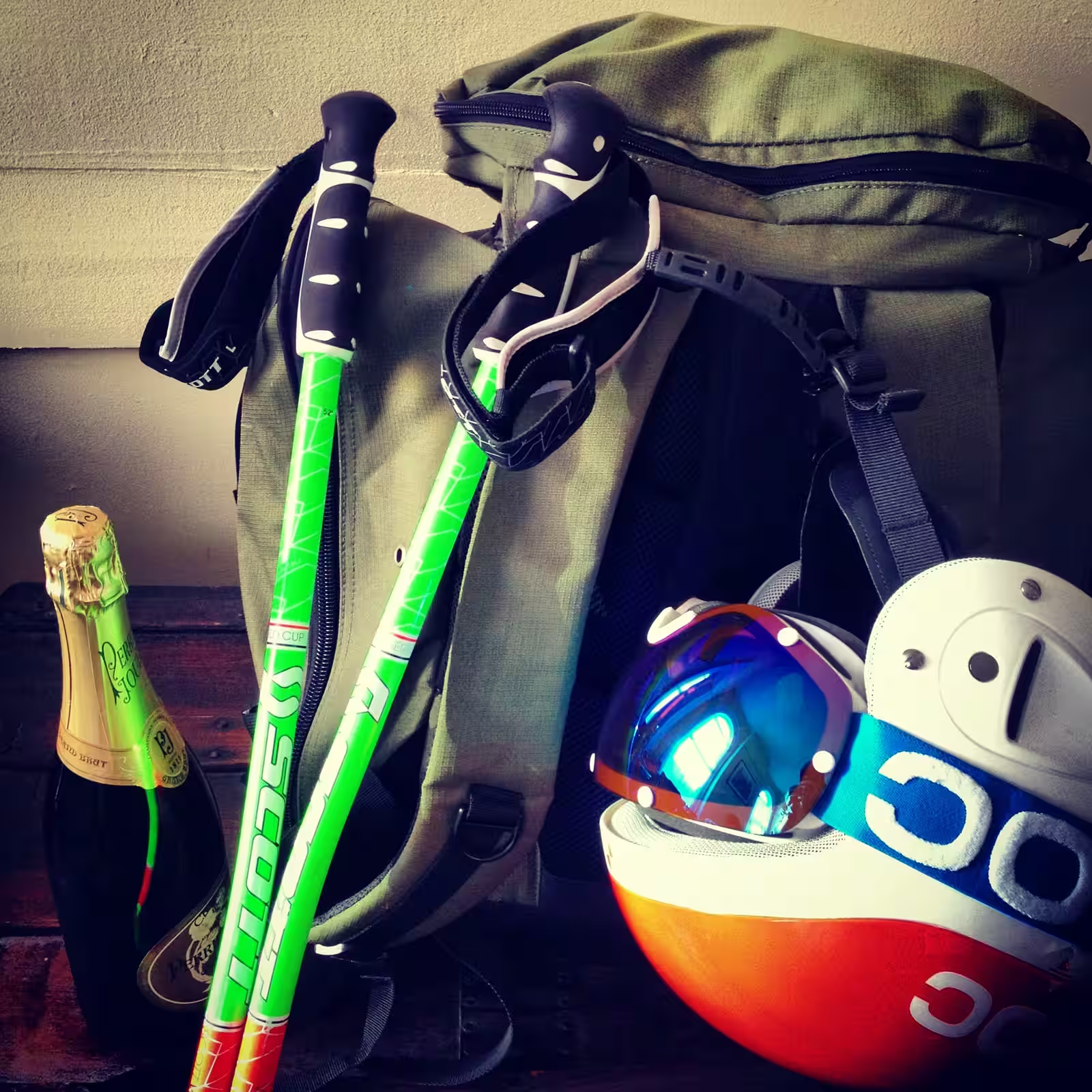
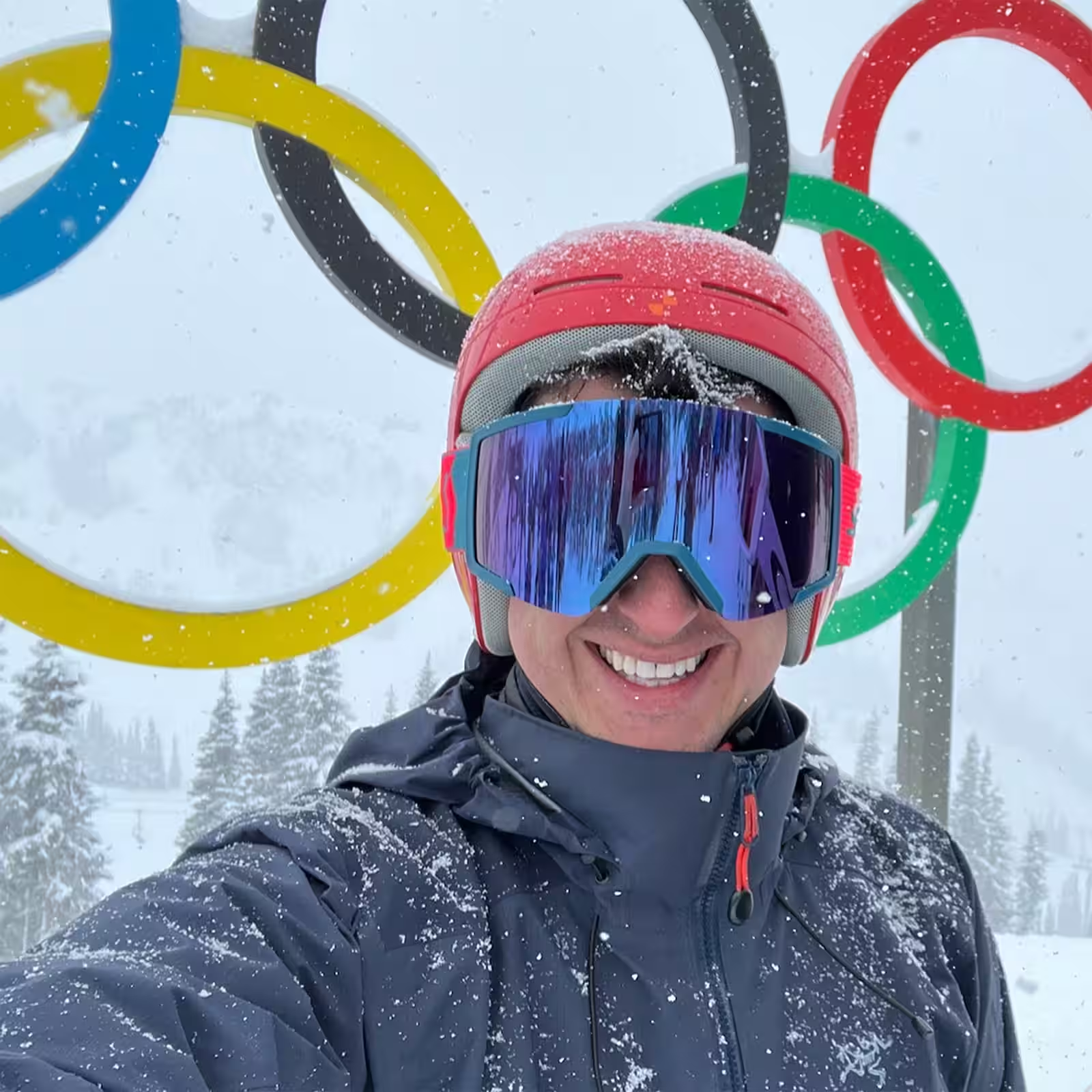
Second: line over turns. Beginners obsess over individual gates, trying to perfect each turn in isolation. Experienced racers think instead about the line — the fastest path through the entire course. Winning runs are not about pretty turns; they’re about preserving speed.
helpingCorporate law presents the same temptation. One can easily spend days perfecting individual clauses, negotiating every adjective, and redlining punctuation as if civilization depended on it. But the greater value often lies in momentum. Which position preserves the company’s speed, credibility, and ability to compete tomorrow? Which line gets us across the finish line, still upright?
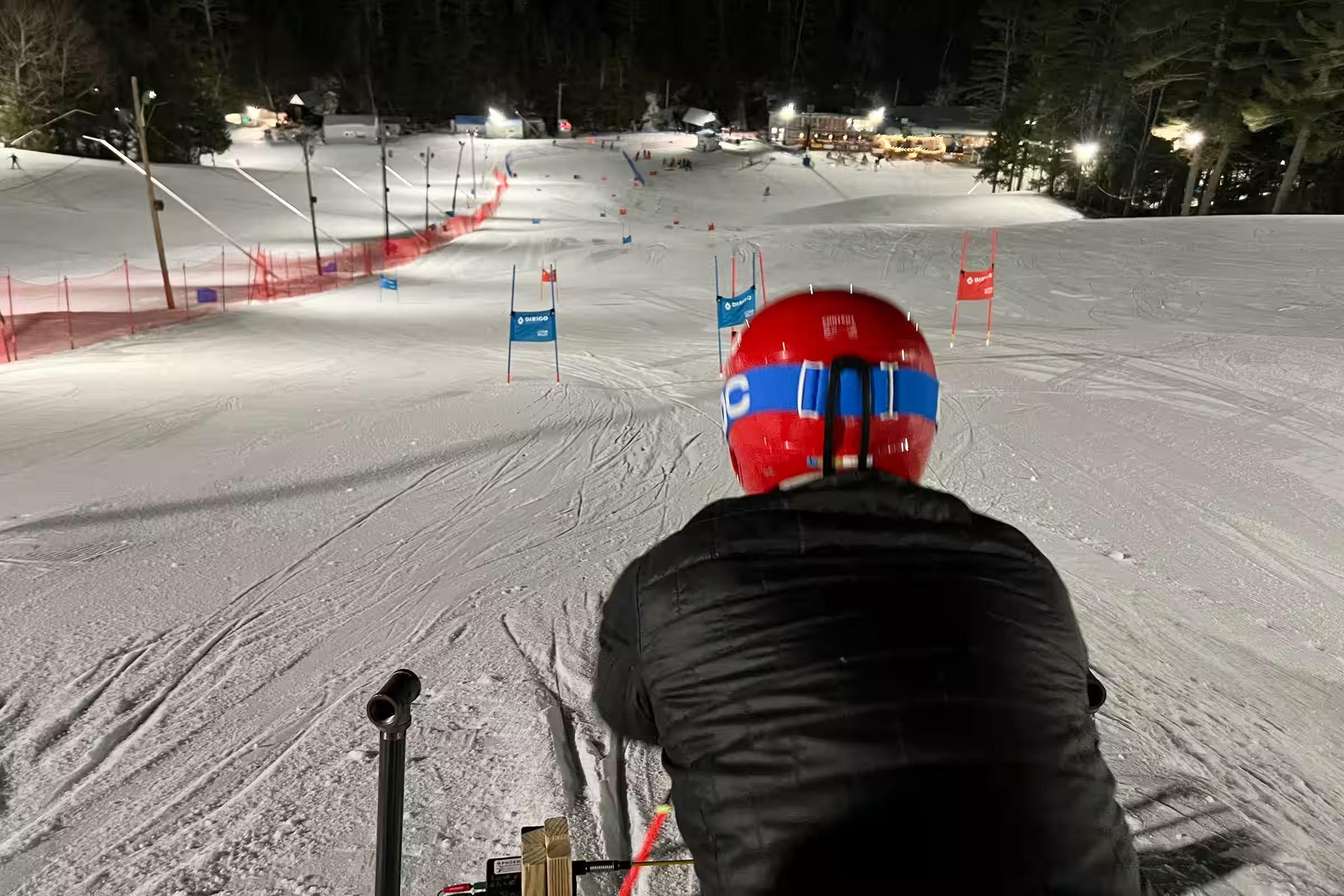
Third: train in the off-season. No one arrives at the starting gate by accident. A twenty-five-second GS (giant slalom) run at sixty miles per hour is the product of months of preparation: drills, conditioning, repetition, coaching, and the occasional humbling crash.
Corporate law operates under similar constraints. When a crisis emerges, one rarely has the luxury of leisurely research. Preparation must already exist. By studying governance structures, equity mechanics, and regulatory nuance before they become urgent, I can respond decisively when the inevitable late-night Slack message appears.
These lessons carry cleanly from gate to governance: study the terrain, choose your line for speed, and train relentlessly. At that point, you are as prepared as one can reasonably be for whatever the mountain — or the regulators — decide to throw at you.
helpingThe connection to inDrive’s values is hard to miss. “Win or learn” may be a useful philosophy in many fields, but it is particularly apt in competitive sport. Every race produces one of those two outcomes, and both are valuable. Perpetual development is simply the logical extension. Even when you win, you still have to train tomorrow.
And there is one final lesson that alpine racing has taught me with absolute certainty: children will enthusiastically participate in almost any winter sport if properly incentivized with hot chocolate. The relationship is strictly linear with respect to the number of marshmallows.